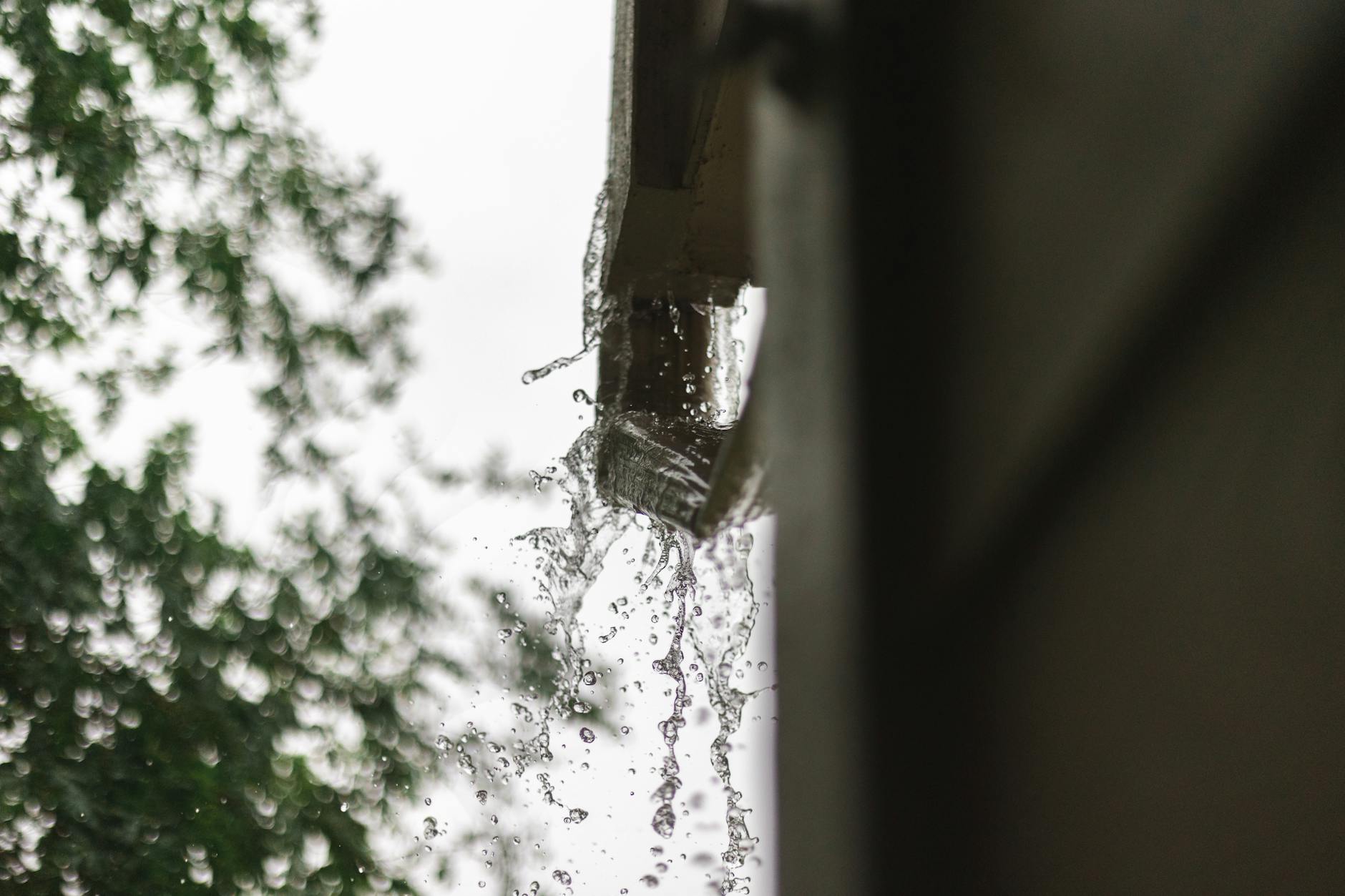
When part of a gutter system needs to be replaced—because a section has rusted through, split, or simply reached the end of its life—the new section must match the old one in profile, material, and finish. This is more complicated than it might appear. Gutter styles have changed over decades, finishes vary, and what looked like a standard plastic or metal gutter from the street might turn out to be a specific product from a particular manufacturer, no longer in production or available only through specialist suppliers.
A mismatched gutter section stands out visually and also risks mechanical failure if the new section does not fit the existing brackets or join properly to the sections on either side. Getting the match right requires careful measurement, identification of the original product, and sometimes patience in sourcing a replacement that is genuinely compatible.
Identifying the Profile and Material of Existing Guttering
The first step is identifying what you are replacing. On a close inspection from ground level using binoculars, you can observe the gutter's shape. Is it a half-round profile—a simple half-circle in cross-section? Or is it a more angular K-section (sometimes called a box gutter), which has a decorative front face and a deeper trough? Is it square or rectangular in profile, tapered toward the back? Each profile sits differently on brackets, requires different connectors, and accepts only matching sections.
The material is equally important. Victorian and Edwardian properties typically have cast iron guttering, often a half-round or ogee profile. Mid-twentieth-century houses might have painted steel gutters, which are susceptible to rust but can be very durable if well-maintained. Modern gutters are almost always aluminium or uPVC (plastic). Each material has different dimensional tolerances, different expansion rates, and requires different fastening methods.
Cast iron sections can occasionally be sourced new, but they are expensive and require careful handling because they are brittle. Some specialists stock reproduction cast iron gutters for heritage properties. If a cast iron gutter is damaged, patching or local repair is often more practical than full replacement, unless several sections are failing.
Plastic gutters became the default choice from the 1970s onward. A plastic gutter system from the 1980s might not be compatible with modern plastic gutters, even if both appear to be roughly the same size and profile. Different manufacturers have different specifications. Some plastic gutter systems have integral corner joints (the corners are one piece), whilst others use separate corner sections that slide together. If you replace one section with a different brand's gutter, you might find the corners no longer fit, or the slope of the connectors is wrong.
The Challenge of Discontinued Products
Many gutter products are discontinued within 15 to 20 years of their introduction. Manufacturers update ranges, modernise production, and stop making older profiles. This means that if your guttering is more than 20 years old and you need to replace a section, an exact match might not be available from regular suppliers. You then have three options: source the part from a specialist salvage company or heritage supplier (expensive), accept a close modern equivalent that is not identical (which usually works but looks slightly different), or replace a larger section of the gutter to ensure consistency across a whole run.
On terraced and semi-detached properties in London, the visible front edge of the guttering is often considered part of the architectural character. A replacement gutter that is a slightly different profile or finish can be noticeable from the street. Some homeowners accept this; others prefer to replace an entire run even if only one section is damaged, to maintain visual uniformity.
Measuring for Correct Fit
Before ordering a replacement section, measure the internal width and depth of the existing gutter, the length of the section being replaced, and the distance between the brackets. Measure at several points along the existing gutter because sagging or corrosion might have distorted it slightly. A new section that is even a centimetre wider or narrower than the existing sections will not fit properly into the corner connectors.
Pay particular attention to the angle at which the gutter slopes toward the downpipe. If the existing gutter has a gentle slope and the replacement section has a different slope, water flow will be disrupted at the transition, and sediment will accumulate. The new section must have the same fall—ideally 1 in 600 (about 2 centimetres of drop per 10 metres of run) for proper drainage.
If the gutter has internal or external corners (mitres), the new section must align with these at the same height and angle. If it sits even slightly higher or lower, water will back up or spill over at the joint.
Fitting and Sealing a Replacement Section
Once a compatible section has been sourced, fitting requires removing the fasteners from the existing gutter on either side of the damaged section, lifting out the damaged section, and sliding the new one into place. The new section must be aligned with the adjacent sections, the brackets must be tightened, and the joints must be sealed with appropriate gutter sealant.
If the existing sections have corroded, the edges might not meet cleanly. Some overlap is necessary for the sealant to grip, but too much overlap will create a ridge inside the gutter that catches sediment. A compromise is usually reached by overlapping by 5 to 10 millimetres and using flexible sealant that can accommodate small misalignments.
Getting a replacement section to match perfectly is rarely possible, but getting it to work properly—to fit mechanically, align with the fall, and seal against leaks—is always achievable with careful measurement and selection. The visual mismatch between a new section and the surrounding older gutters usually becomes less noticeable after a season or two, as the new section weathers and picks up the same patina of dust and weathering as the rest. If achieving a perfect visual match is important, gutter repairs london specialists can often advise on sourcing closer alternatives or on whether replacing a larger section to maintain consistency is the best approach for your specific property.